Gorgeous beaches
Preveli Beach, the palm beach on the south coast

On a small bay of the Libyan Sea on the south coast of Crete is the unique palm beach of Preveli. Behind the sandy beach is a mountain stream that runs into a gorge lined with Cretan date palms. This unique 'tropical landscape' is certainly one of the most photographed bays on the island. Do as the locals do and stop again and again on the way down to enjoy the view.
Excursion to Preveli
Preveli is one of the most significant daytrip destinations on the south coast of Crete. The name stands for a unique beach and a wild canyon, where hundreds of palm trees line the shore of a tumultuous mountain brook. But Preveli also includes a romantic ruined monastery and an intact monastery of historical significance, an old Ottoman bridge, a secluded taverna by the river and a modern memorial to the Second World War. Preveli is also known for hiking and swimming, which adds up to a very active day.
Canyon and Preveli Beach
There is no road to Preveli Beach and the palm-lined canyon. You either arrive by boat in the morning from Plakias or Agia Galini (in the season, roughly May to October), or you hike down for about 20 to 30 minutes from the large car park, the last part down more than 300 steps. You reach the car park via a dead-end road leading off the road to Piso Preveli Monastery. It most recently cost about €4 per car and in July and August it is often full by mid-morning, so come early.
Just beyond the Ottoman bridge next to Kato Preveli Monastery, the Megalopotamos enters a desert-like canyon with reddish rock walls. The last kilometre of the gorge resembles a palm tree oasis. Then the river broadens and winds across a coarse, sandy beach, losing itself in the Libyan Sea.
Sun worshippers lie between the warm salt water and the cold fresh water on this beach, which offers no shade. Only on the upper part of the beach, below the steps, is there a small beach bar and sunbeds with umbrellas in summer. Beaten tracks lead into the palm grove. You can make your way upriver clambering, wading and, in some parts, swimming over cataracts, an enjoyable adventure even for big kids. In autumn, when the river is relatively low, you can even hike right up to the Ottoman bridge and back, but great caution is advised. You will also need a waterproof bag for your valuables.
Ottoman Bridge
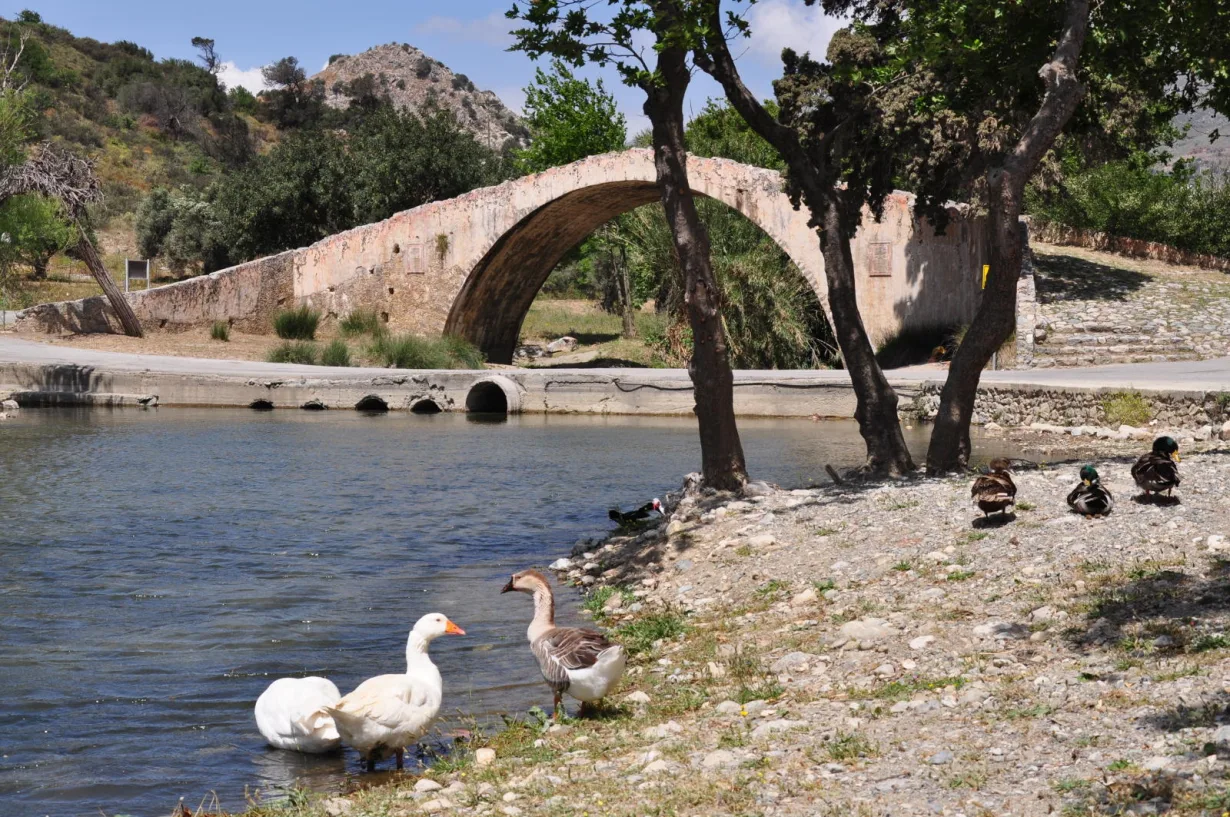
This single-arched bridge from 1850 may no longer serve its purpose today, but it is still accessible on foot. It spans the Megalopotamos ("large brook"), which later flows across Preveli Beach and into the Libyan Sea. There is a good summer taverna right by the bridge, where ducks and geese provide entertainment.
The ruined monastery of Kato Preveli
These impressive monastic ruins lie below the road in the oleander valley of the Megalopotamos, which carries water all year round. The monastery was founded in the 17th century, but has been uninhabited since it was destroyed by the Ottomans in the middle of the 19th century. It is fenced off because of the risk of collapse, but you can go inside when the gate is open. Otherwise, you can take beautiful photos of the monastery from the road, if you are at least 1.75 m tall, tall enough to hold the camera over the fence.
Memorial
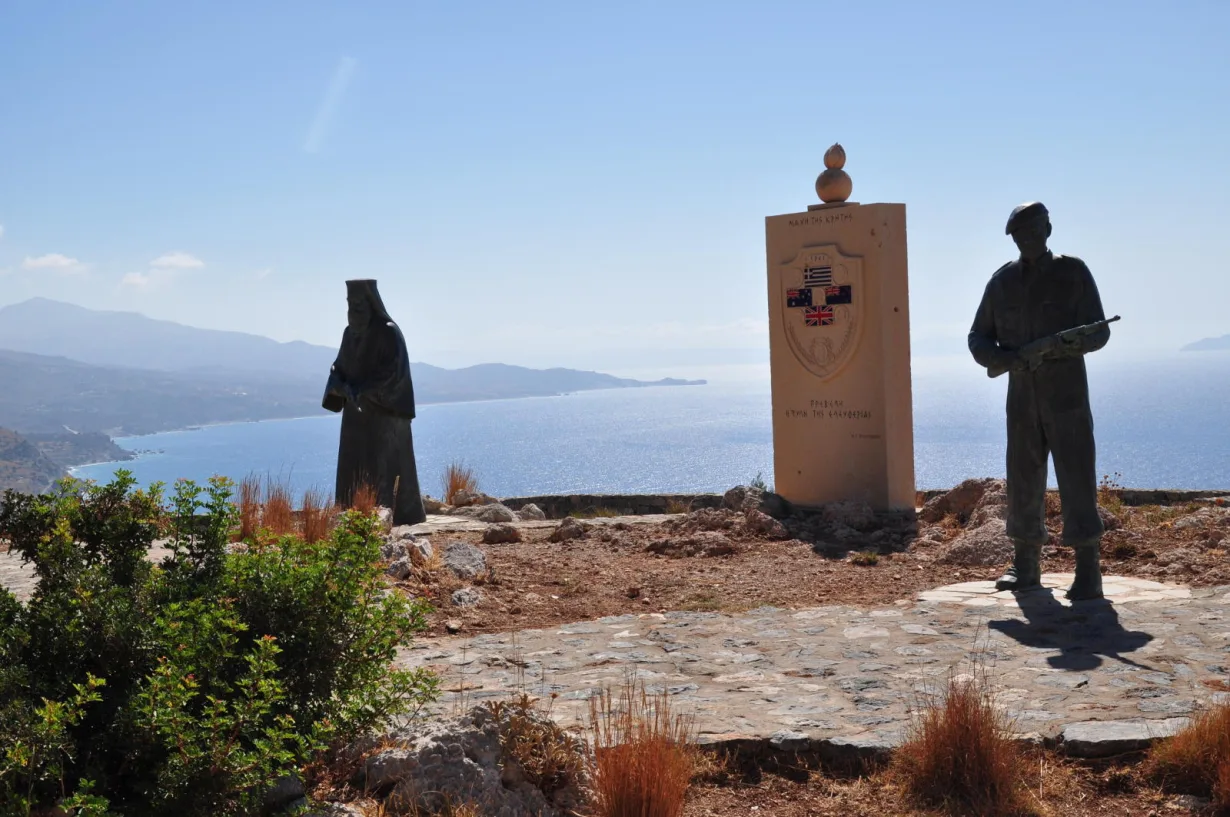
Between the turn-off to the beach car park and the monastery, a simple memorial with larger-than-life bronze statues of a Cretan priest and a British soldier stands high above the sea on the left. It commemorates the significant role that the monastery played in the days shortly after the German invasion. From here, a great number of British troops, mostly soldiers from Australia and New Zealand, were evacuated to North Africa with the aid of the monks.
Piso Preveli Monastery
A memorial in the courtyard of the monastery also commemorates how the monastery supported the British army. Part of the building is derelict, and other parts have been restored or even rebuilt (admission most recently €3; shoulders and knees should be covered). Inside the monastery church, consecrated in 1836, an icon on the iconostasis depicts the creation of mankind, from Adam and Eve to small animal figures that include a unicorn. Many more icons, mostly from the 17th and 18th centuries, are on display in the monastery museum. You can read more about the icon and the monastery on our page about Preveli Monastery.
You are in category:
You might also be interested in:
Experience Crete Your itinerary contains 1 experience
gorgeous
beaches romantic
old towns picturesque
places fascinating
ancient sites imposing
gorges unique
nature delightful
boat trips rewarding
excursions extraordinary
stalactite caves adventure
& thrills secluded
monasteries gourmet
restaurants culinary
products